
Seasonal marketing offers brands an opportunity to become part of a conversation that is already happening. Whether the occasion is a major sporting competition, a holiday or a cultural event, audiences are often more engaged, more emotionally invested and more receptive to relevant ideas.
But relevance alone is not enough.
The most successful seasonal campaigns do more than acknowledge an event. They connect it to the brand in a way that feels distinctive, timely and authentic. The aim is not simply to follow what everyone else is doing, but to create something that could only have come from your brand.
Why seasonal marketing matters
Major events create a shared sense of anticipation. People talk about them, make plans around them and look for ways to participate. For brands, this creates a valuable window in which a message can feel especially immediate.
A well-timed campaign can help a business:
- capture attention while interest is high;
- create an emotional connection with its audience;
- introduce fresh energy into its marketing;
- encourage visits, enquiries or purchases;
- and remain visible in a busy, competitive market.
Timing, however, is only part of the equation. Seasonal marketing still needs a strong idea behind it. Without one, a campaign can quickly feel generic or opportunistic.
Start with the brand, not the occasion
One of the biggest risks with seasonal creative is allowing the event to overwhelm the identity of the business.
When many brands respond to the same occasion, familiar colours, phrases and visual references begin to appear everywhere. The result can be a sea of work that looks interchangeable. A campaign might be recognisably connected to the season, but no longer recognisably connected to the brand.
The better approach is to begin with the brand’s established character. Its colours, typography, tone of voice and visual language should form the foundation. Seasonal elements can then be introduced in a way that complements rather than replaces that identity.
This creates a useful balance: the work feels relevant to the moment, but still familiar to the brand’s existing audience.
The Locker Room: “Be World Class”
This was the challenge behind a seasonal campaign I created for The Locker Room.
The campaign was designed around the excitement of the World Cup, giving the brand a strong visual presence during one of the most widely followed sporting events. The creative needed to make an immediate connection with football while retaining the premium look, energy and identity associated with The Locker Room.
The central idea was “Be World Class.”
It is a simple line, but one with several layers. It connects naturally with elite international football while also speaking to personal aspiration, confidence and quality. This made it relevant to the event without relying on a literal or overly predictable message.
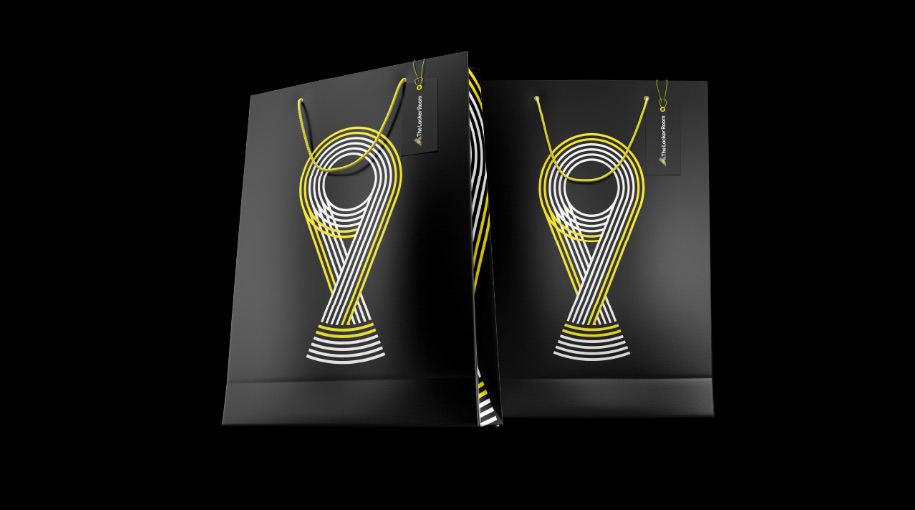
The campaign’s trophy-inspired graphic became its main visual device. Constructed from repeated flowing lines, the shape references the competition while feeling like a piece of The Locker Room’s own visual language. The line work also introduces a sense of movement, focus and energy—qualities that belong equally to sport and fashion.
A high-contrast palette of yellow, black and white helped the campaign command attention. Black-and-white photography gave the imagery a bold editorial quality, while the yellow treatment added impact and tied the individual pieces together.
The result was a flexible identity that could work across posters, advertising, packaging and retail environments while remaining instantly recognisable.
Build a campaign, not a single image
Seasonal marketing often needs to work across several different customer touchpoints. Someone might first see the idea on social media, encounter it again through outdoor advertising and finally experience it in-store.
For that reason, it is important to think beyond one hero visual.
A strong campaign needs a consistent creative system: recognisable colours, typography, imagery, messaging and graphic elements that can adapt to different formats. Each item should feel complete in its own right, but clearly belong to the same family.
For The Locker Room, the campaign identity extended across multiple applications, from large-format advertising to printed materials and branded packaging. The scale and composition could change, but the central visual language remained consistent.
This repetition builds recognition. It also makes the campaign feel more considered and substantial, creating a joined-up experience rather than a collection of unrelated promotional pieces.
Timing makes the difference
Even excellent creative can lose impact if it appears too early or arrives after interest has peaked.
Seasonal campaigns therefore need careful planning. Time must be allowed for the initial idea, design development, approval, production and rollout. This is particularly important when several formats or suppliers are involved.
Launching at the right moment allows a brand to benefit from rising anticipation. It also leaves room for the campaign to develop as the event unfolds, rather than relying on a single piece of communication.
Planning ahead does not mean the creative has to feel predictable. In fact, an early start usually creates more space for experimentation and a stronger, more original result.
Relevance should never feel forced
Not every seasonal event will suit every business. Before committing to a campaign, it is worth asking whether there is a genuine connection between the occasion, the brand and its audience.
What does the audience care about? How does the event relate to the product or service? What can the brand contribute that feels useful, entertaining or inspiring?
If those questions have strong answers, the opportunity is likely worth exploring. If the connection feels strained, it may be better to concentrate on a different moment that offers a more natural fit.
Audiences are quick to recognise when a brand is joining a conversation simply because it is popular. Authenticity comes from finding a meaningful point of connection and expressing it in the brand’s own voice.
Make the moment your own
Seasonal marketing is most effective when it combines cultural relevance with a clear and confident identity.
The Locker Room campaign drew on the excitement and visual energy surrounding the World Cup, but it did not abandon the brand in the process. Through the “Be World Class” message, distinctive trophy graphic and bold use of colour and photography, the campaign created its own place within the wider conversation.
That is the real opportunity offered by seasonal marketing: not merely to be present, but to be memorable.
When the timing, idea and execution come together, a seasonal campaign can capture the feeling of a particular moment while continuing to strengthen the brand long after that moment has passed.